LotsaCruzn
Member
Hi folks,
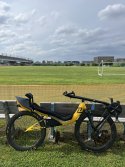
I recently bought a V20c having never ridden a recumbent and wanted to share my experience.
First a bit of background for context on how I'm approaching the V20c. I'm 39M, 5'11", about 175 lb. I've ridden diamond frame bikes off and on since I was a kid, and in the last couple of years have been deliberate about riding for fitness. I've averaged about 2000 miles/yr on my Lynskey GR 300 gravel bike, which I primarily use with a road wheel set. I added clip on aero bars to help with wrist pain, and have enjoyed the speed boost. That said, the bike still hasn't been very comfortable either on the hoods aero bars (I have had a professional bike fit which helped some but did not eliminate the pain). I started looking into Tri bikes, thinking if I had something purpose built for a more efficient position, I could maybe hold that position for longer.
Enter Cruzbike. I started seeing bike ads on streaming services, and saw one for the V20c. This is the one time I can recall a targeted ad actually working on me. After a bit of research it was clear the bike would fit me, be fast, and (from all accounts) actually be comfortable. I was also drawn by the dynamic boom design. Having spent plenty of time maintaining the Lynskey, I was not excited about the super long chain featured on RWD recumbents.
I followed the instructional videos to learn to ride. For me, it was nearly like learning to ride a bike for the first time. Some skills are transferrable, but learning to deal with the dynamic boom was a brand new skill.
Before taking the bike on roads with any real traffic I needed a place to mount my headlight and bike radar (which has a flashing light). I designed a couple of 3d printed parts for that:
- https://www.printables.com/model/1312227-garmin-ut800-headlight-mount-for-cruz-v20c
- https://www.printables.com/model/1311142-garmin-varia-mount-for-cruz-v20c
The first hundred miles or so were quite taxing mentally. The brain has to figure out how to coordinate upper body inputs to keep the wheel going straight. At first, it felt much easier to pedal at lower cadence since that way the upper body inputs are more spaced out. If I had it to do over, I'd focus on becoming comfortable with a higher cadence. With the recumbent seating I found I could push harder than on a diamond frame bike, and I ended up with aching knees a few times - if I'd kept that up, there could have been knee problems. As I became more comfortable, I intentionally kept a higher cadence to prevent that.
Stopping, and especially starting, were tough initially. I found 3rd gear to be good for starting on a flat surface (chainring in smallest gear, cassette in 3rd from largest). Stopping has become a breeze - I can usually stand up while the bike is still rolling a bit, and stop it in time to sit on the back of the seat. That lets me sit upright at traffic lights (my bike computer mount would force me to hunch over otherwise). Definitely don't recommend trying until comfortable with normal stops!
Around the 200 mile mark the mental effort seemed to decrease quite a bit. I started going as fast or faster than on the Lynskey. It seemed like my legs needed time to adapt before I could put down the same power. By 300 miles I was feeling strong on the V20c.
To summarize, here are the main things I learned when transitioning to the V20c:
- Learning the dynamic boom takes time, but it pays off. I really love having my upper body involved when hammering it out
- It takes time to learn how to delivery power in the recumbent position. The speed will come but it will take time
- Cruzbike's claims about the bike being extremely comfortable are (for me) absolutely true. The only aches I have after riding the V20c are related to my exercise effort. I've hopped back on the Lynskey several times and am amazed at how much pain I was accepting.
I recently bought a V20c having never ridden a recumbent and wanted to share my experience.
First a bit of background for context on how I'm approaching the V20c. I'm 39M, 5'11", about 175 lb. I've ridden diamond frame bikes off and on since I was a kid, and in the last couple of years have been deliberate about riding for fitness. I've averaged about 2000 miles/yr on my Lynskey GR 300 gravel bike, which I primarily use with a road wheel set. I added clip on aero bars to help with wrist pain, and have enjoyed the speed boost. That said, the bike still hasn't been very comfortable either on the hoods aero bars (I have had a professional bike fit which helped some but did not eliminate the pain). I started looking into Tri bikes, thinking if I had something purpose built for a more efficient position, I could maybe hold that position for longer.
Enter Cruzbike. I started seeing bike ads on streaming services, and saw one for the V20c. This is the one time I can recall a targeted ad actually working on me. After a bit of research it was clear the bike would fit me, be fast, and (from all accounts) actually be comfortable. I was also drawn by the dynamic boom design. Having spent plenty of time maintaining the Lynskey, I was not excited about the super long chain featured on RWD recumbents.
I followed the instructional videos to learn to ride. For me, it was nearly like learning to ride a bike for the first time. Some skills are transferrable, but learning to deal with the dynamic boom was a brand new skill.
Before taking the bike on roads with any real traffic I needed a place to mount my headlight and bike radar (which has a flashing light). I designed a couple of 3d printed parts for that:
- https://www.printables.com/model/1312227-garmin-ut800-headlight-mount-for-cruz-v20c
- https://www.printables.com/model/1311142-garmin-varia-mount-for-cruz-v20c
The first hundred miles or so were quite taxing mentally. The brain has to figure out how to coordinate upper body inputs to keep the wheel going straight. At first, it felt much easier to pedal at lower cadence since that way the upper body inputs are more spaced out. If I had it to do over, I'd focus on becoming comfortable with a higher cadence. With the recumbent seating I found I could push harder than on a diamond frame bike, and I ended up with aching knees a few times - if I'd kept that up, there could have been knee problems. As I became more comfortable, I intentionally kept a higher cadence to prevent that.
Stopping, and especially starting, were tough initially. I found 3rd gear to be good for starting on a flat surface (chainring in smallest gear, cassette in 3rd from largest). Stopping has become a breeze - I can usually stand up while the bike is still rolling a bit, and stop it in time to sit on the back of the seat. That lets me sit upright at traffic lights (my bike computer mount would force me to hunch over otherwise). Definitely don't recommend trying until comfortable with normal stops!
Around the 200 mile mark the mental effort seemed to decrease quite a bit. I started going as fast or faster than on the Lynskey. It seemed like my legs needed time to adapt before I could put down the same power. By 300 miles I was feeling strong on the V20c.
To summarize, here are the main things I learned when transitioning to the V20c:
- Learning the dynamic boom takes time, but it pays off. I really love having my upper body involved when hammering it out
- It takes time to learn how to delivery power in the recumbent position. The speed will come but it will take time
- Cruzbike's claims about the bike being extremely comfortable are (for me) absolutely true. The only aches I have after riding the V20c are related to my exercise effort. I've hopped back on the Lynskey several times and am amazed at how much pain I was accepting.